
The sign* on the side of the Copper Queen Library / Post Office building commemorating a speech on women’s suffrage just prior to the 1912 election which approved women’s right to vote made me want to know more about what was going on at the time in Bisbee.
Fortunately, the Bisbee Daily Review covered this event, and did so (mostly) impartially. Which was somewhat of a surprise. There was a major article in the paper the day after the event, and the paper also ran an editorial commentary about the subject.
`It’s important to understand that newspapers everywhere in 1912 did not feel it incumbent upon themselves to separate news and opinion.
Referring to her by her maiden name, Mrs. Laura Gregg – she apparently had just married Joseph Cannon that year – the headline reported that she had spoken to 500 persons on the cause of equal rights.
Audience of 500
“There were fully 500 persons in the crowd surrounding the platform and on the porches of the library building, and less than two dozen of them were women,” the article reported. That was vital to the cause, because only men would be voting in the November election in which the electorate of the brand-new state was being asked to give women the right to vote.
“Mrs. Cannon is a polished speaker and evidently a practice campaigner. Her words carried to the outermost circle of the none too attentive crowd and were easily heard.
“She turned her words, her phrases, and her simple and compound sentences with the ease of a chef turning Saratoga chips** and her articulation was well-nigh perfect,” the Review reported.
“Though conviction was apparent in her remarks, her enthusiasm is the kind that follows rather than leads her thought,” the paper said. [I’m not sure what that means.]
“Perhaps it is too late in the sequence of equal suffrage to expect that Mrs. Cannon should appear a Joan of Arc, but those who went to hear her from curiosity she disappointed by the very poignancy of her logic.
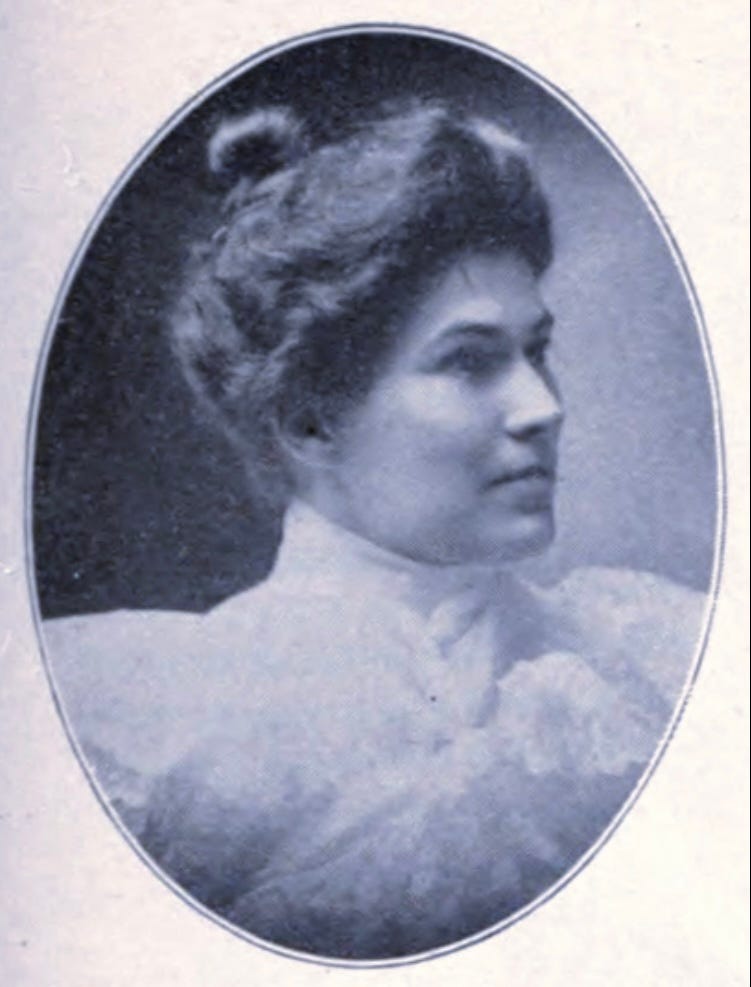
Laura Gregg Canon. Image is from Wikipedia.
“No mannish woman is Mrs. Cannon. She was dressed neatly in a white lingerie gown and wore white shoes. In person she is distinctly feminine; in fact so much that the men in the audience were in danger of overlooking the logic of her claims for equal suffrage and remarking in their lordly way, “let them have what they want “as a courtesy to the feminine appeal.
“The fact that there were a few women in the crowd dampened the speaker’s ardor nor ruffled her stage presence not a whit.”
Arguments not new
“Mrs. Cannon’s arguments for woman’s suffrage were not new and candor inspires the assertion that they were apathetically received. There was a little of the ‘because’ reasoning about the speech but her explanation of how woman was ‘victimized’ and brought to her present place of second fiddle in the civilization orchestra was novel, the paper said.
“She asserted that in the days when man went abroad with his stone axe to forage for food their women made the tribal laws, but that when men settled down and erected shelters, it naturally happened that the keeping of the home and the children fell on the woman.
“In succeeding ages man got more food than he needed for home consumption and he bartered them. Then he made laws for the protection and regulation of wealth and trade, and he has been doing it since.”
Cannon was introduced by William B. Cleary, an attorney who Bisbee will hear a lot more about a few years hence at the time of the Bisbee Deportation. Along with Mrs. Cleary, he occupied a seat on the platform, which apparently was set up for this planned event.
Newspaper’s position
On its editorial page of September 20, the Review pointed out that suffrage was the only initiative to be voted on in the November election, aimed at creating a constitutional amendment granting the vote to women in Arizona.
“The general belief seems to be that this amendment will carry in the state and so far as the Review is concerned, it will not worry if it does, though we are not committed to the measure.”
This franchise, the paper said, will only add “new burdens and responsibilities to the mothers, wives and sisters in the state without any material effect on election results, as the women in the great majority of cases will follow the lead of their husbands, fathers and brothers when they reach the election booth.”
Then the Review makes a comment which is difficult to fully understand: “So far as the women in the underworld are concerned they will join their kind among the men when it comes to voting.” I assume this means there was some concern that women of the demimonde, those on the fringe of acceptable society, would have more power to influence decisions of morality.
Overall, the newspaper said, the franchise “will bring no political revolution on any question involved in future campaigns, but will subject the women to increase duties and responsibilities without offering them anything worthwhile as a recompense.”
And as the sign tells us, the measure won at the polls in November.
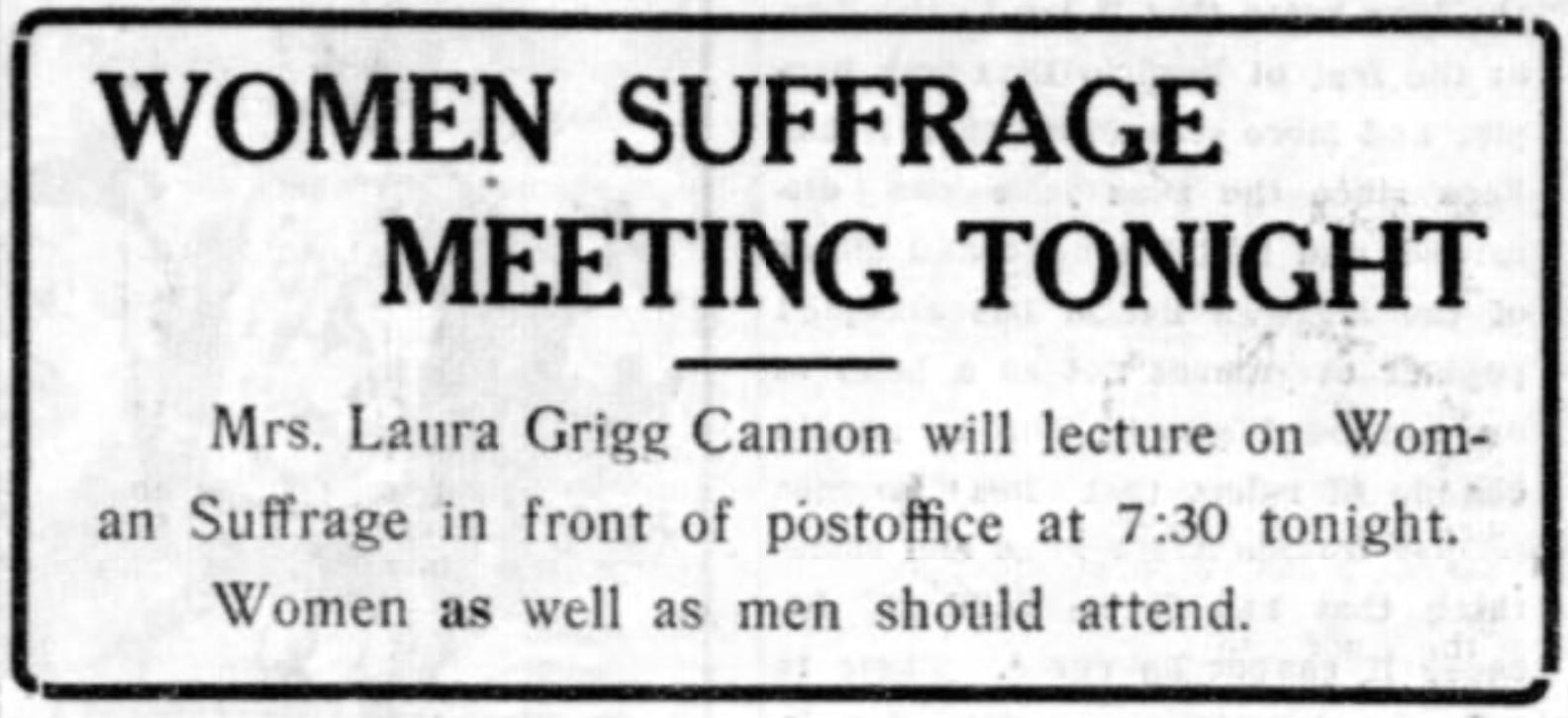
This is the ad for the lecture that ran in the Review on September 26, 1912. Note that her name is misspelled.
* One of the initiatives of the William G. Pomeroy Foundation is its signage program, which focuses on historic research, preservation and historic and cultural heritage tourism.
**Saratoga chips was the original name for potato chips. Here’s the story.
Be First to Comment